
We the People

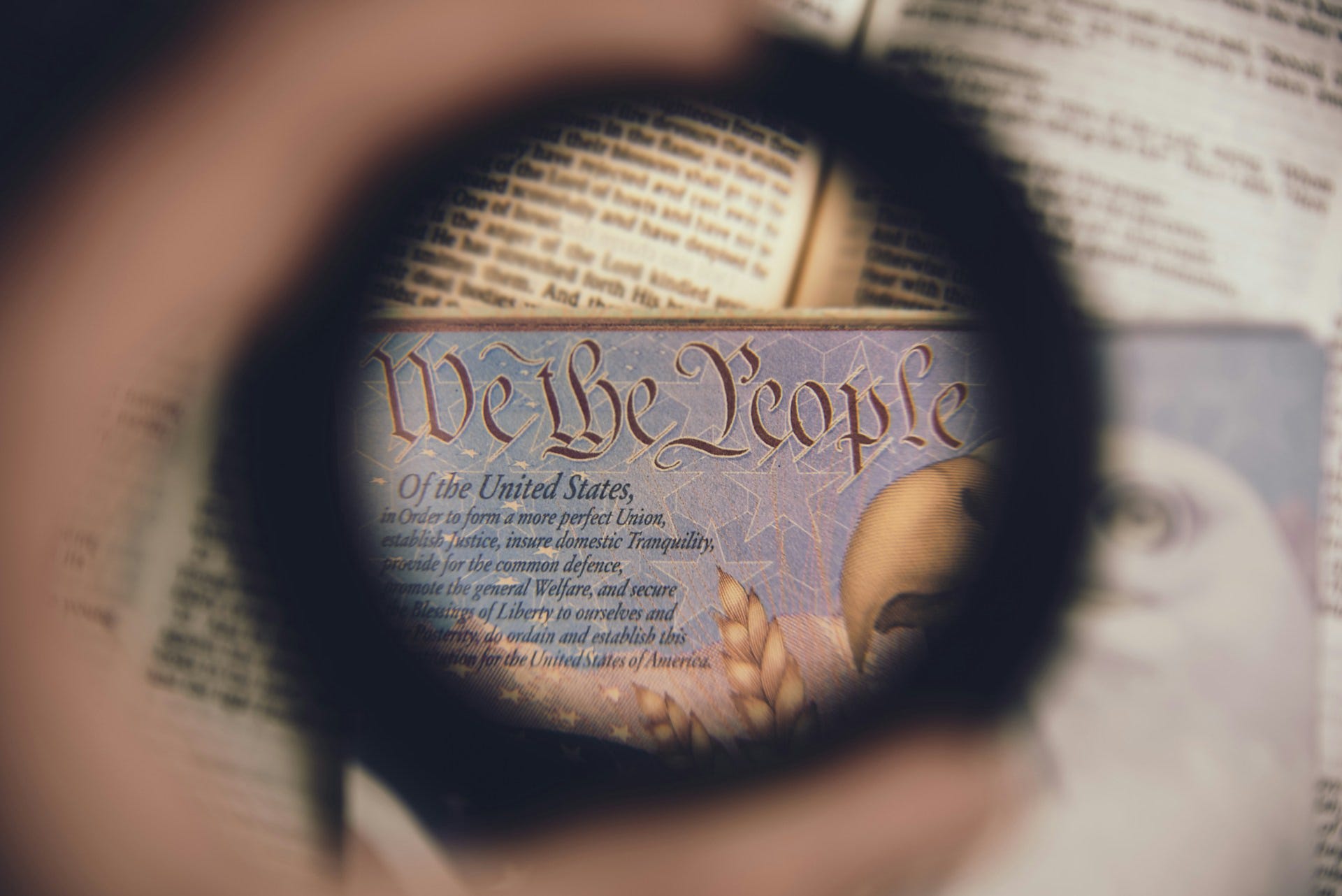
Photo from Anthony Garand via Unsplash
As most of you who read my Substack regularly (or irregularly) know, I’ve spent the past year trying to write about the world of AI we’re entering rather than the political life of this country. My last post — about my trip to Washington, DC with my grandfather when I was twelve — was about as political as I’ve gotten. Today’s post will be more political and brief.
This country, the United States of America, has existed for 250 years, ever since it declared independence from England and King George — a king who was understood to be the embodiment of the state. The structure of our government, and our understanding of what this country is, have long rested on three related ideas:
“We hold these truths to be self-evident, that all men are created equal.” Declaration of Independence
“We the people of the United States, in Order to form a more perfect Union…” Constitution of the United States
“…that government of the people, by the people, for the people, shall not perish from the earth.” Abraham Lincoln, Gettysburg Address
Those three statements — that all men are created equal; that the people themselves create the structure of the state and its obligations; and that the government acts in the interests of its people rather than its representatives — have defined America in both its aspirations and its functioning.
I’ve been around a long time. When I was born in 1940, Franklin Delano Roosevelt was President. I’ve lived through the presidencies of FDR, Harry Truman, Dwight Eisenhower, John F. Kennedy (the real one), Lyndon Johnson, Richard Nixon, Gerald Ford, Jimmy Carter, Ronald Reagan, George H.W. Bush, Bill Clinton, George W. Bush, Barack Obama, Donald Trump, and Joseph Biden. Fifteen presidents.
Here’s the thing: Fourteen of those presidents understood the meaning of those three sentences. They understood that they were representatives of the people; that the office they held existed at the sufferance of the people; and that their time in office would eventually have to be surrendered.
When Vice President Vance said last week that Richard Nixon was the victim of the “deep state,” he was wrong. Simply wrong. Factually wrong. Nixon resigned because he had lost the trust and confidence of the elected representatives of the people — senators and congressmen of both parties. This was no “deep state,” no faceless bureaucracy. These were the people’s elected representatives. Nixon understood that. Whatever his sins, major or minor, he understood that the president represents the state but is not the state.
Donald Trump seems to have forgotten that — or never believed it. His actions reveal that he thinks he is the state, the embodiment of the state. That he is King George. That he is Louis XIV, who famously said, “L’état, c’est moi.” I am the state. No matter what the Supreme Court said about Article II of the Constitution, it did not say that. It did not say that Donald Trump, or any president, is the state. We forget that at our peril.
“We the people tell the government what to do; it doesn’t tell us.” Ronald Reagan, First Inaugural Address
“You are the power.” Barack Obama, in speech after speech
Arguably, the two presidents who best represented the conservative and liberal strains in American democracy echoed each other. For both, it was the people who determined the course of the state; it was the people in whom the power rested; it is the people who are the state. We forget that at our peril.
“We the people…”
We are the state.
We are the people.
Spot on, as usual. Too many in power have mastered the art of looking Americans in the eye and lying to their faces, imposing falsehoods that they somehow believe are better than the truths that have sustained us through generations