
Elegy

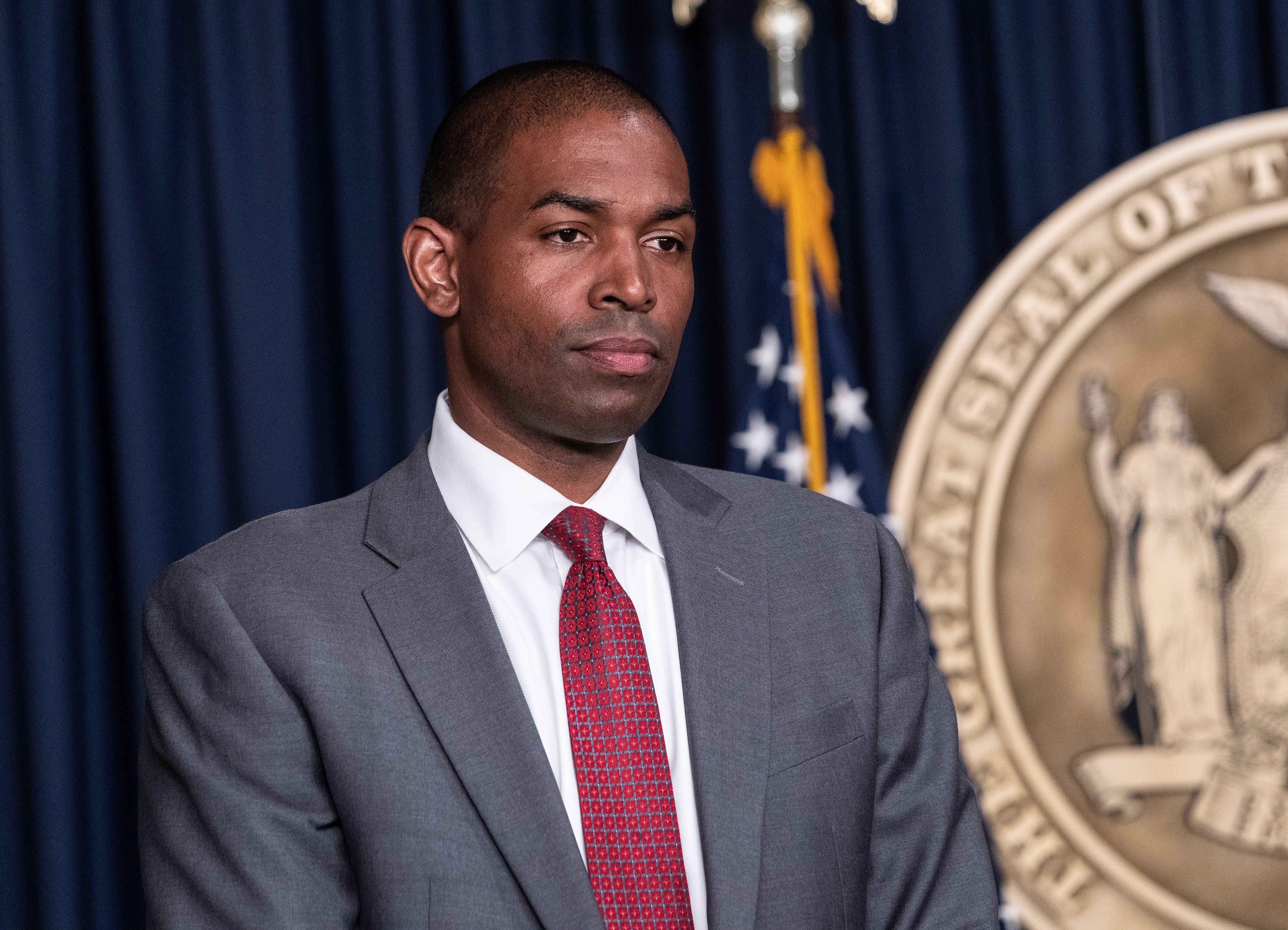
The front page of the February 4, 2026, Hudson Register‑Star carried a headline that would have been unremarkable a few years ago: “Delgado endorses Barrett primary challenger…” What makes it striking now is not the endorsement of Sam Hodge (who is primarying NY Assembly Member Didi Barrett), but that it’s one of the few times Antonio Delgado’s name has appeared in print during a campaign in which he is running to replace incumbent Kathy Hochul as the Democratic candidate for governor. Delgado gets scant media coverage anywhere — in heavily Democratic New York City, in Governor Hochul’s home turf of Buffalo, even in Columbia County, which he represented in Congress only four years ago. For a statewide candidate with limited name recognition, that kind of invisibility is not a hurdle; it’s a wall. And it raises a harder, more elegiac question about whether Delgado’s moment, once so full of promise, has quietly passed him by.
When Delgado first ran for Congress in 2018, he was the right candidate for a district in transition: thoughtful, moderate, articulate, and willing to go where many Democrats rarely ventured. He didn’t just talk about broadband, health care, and small-town economic anxiety — he showed up in firehouses, VFW halls, and rural community centers where Democrats were often met with folded arms. He tried to make people — including conservative Republicans — feel that he represented all of them, not just the voters who already agreed with him. And his record in Congress reflected that instinct throughout his tenure: a policy approach aimed at the whole district, not just the Democratic parts of it.
Redistricting didn’t necessarily make the 19th Congressional District less forgiving; it simply made it different. The new lines meant that Delgado would have had to repeat all the work that got him elected in the first place — introducing himself to a fresh set of rural voters, earning trust in towns where he had never campaigned, and rebuilding the cross‑partisan relationships that had defined his first term. For a representative whose political identity was rooted in showing up everywhere, that wasn’t a challenge so much as a demand to start over. And it’s not hard to see why the lieutenant governorship, with its statewide platform and relative stability, looked like a rational next step.
But the lieutenant governorship in New York is a strange office: high-ranking but low‑visibility, important but rarely influential. It’s totally dependent on the governor’s willingness to share oxygen, and the structure of the job often leaves its occupant without a clear public identity. Governor Hochul seemed to want to leave him little air. I learned a version of this firsthand a few years ago, when I was helping organize the Art School of Columbia County’s 10th‑anniversary celebration. I hoped to invite Delgado to speak, but discovered there was no direct way to reach his office; every channel routed through the governor’s staff. I eventually reached his team only through local party contacts. It was a small thing, but it revealed how tightly controlled the role can be — and how difficult it must have been for someone whose political style had always depended on accessibility and direct engagement. Seen in that light, his later efforts to break free of the governor and assert a more independent voice made sense.
The deeper problem for Delgado is not personal but structural. The Democratic Party’s internal dynamics have shifted over the past decade, with much of its energy — and much of its rhetoric — coming from the left. For those of us who think of ourselves as more or less centrist, there were years when it felt as if the party no longer had room for people like us, or no longer wanted to. The language of persuasion gave way to demands for purity. The broad coalition that once defined Democratic politics seemed to be narrowing into something sharper, more ideological, and less forgiving.
Trump’s reemergence has forced some recalibration, to be sure. Faced with a political figure who thrives on division, many Democrats have rediscovered the value of moderation — not as an ideology, but as a strategy for governing a diverse state and country. But that shift has not automatically reopened the lane for centrists like Delgado. The center may be newly acknowledged, but it is not newly defined. And in a primary electorate shaped heavily by downstate turnout and progressive activists, it’s not clear where a figure like Delgado fits.
This is not a new story in American politics. Democrats Harold Ford Jr. and Evan Bayh both discovered that the centrist lane they once occupied had quietly narrowed beneath their feet. Republicans have their own versions of this, something amply shown during the Trump years. Delgado’s trajectory fits that broader pattern: a politician whose skills were real, whose temperament matched a particular moment, and whose moment may have passed before he had the chance to fully realize it.
Which brings us back to the endorsement that prompted these reflections. Delgado’s decision to back Sam Hodge is not remarkable on its own. Politicians endorse candidates all the time. But the gesture carries a certain poignancy. It is the move of a statewide official who no longer has a statewide constituency, a politician trying to remain visible in a landscape that has given him no clear path forward.
Politics is not only about talent or ambition. It is also about alignment — between the individual and the moment, the message and the electorate, the temperament and the times. Delgado’s alignment was once strong. Now it is weaker. His story is a reminder that political life is not a straight line but a series of openings and closures, of moments seized and moments missed. And sometimes, as in this case, it becomes a quiet elegy for a lane that once existed — and may yet exist again — but, for now, seems closed.
Mike, as always, a very relevant , thought provoking piece. Even a million miles away here in Newsone land,, your insights about the lane being narrowed or widened by virtue of circumstances personality and moment is very apt.
I hope you are well and thriving.
I am still putting one foot in front of the other!!!! A victory indeed.
Best. Ed
Very good observations, Michael. Being new-ish to the area and to New York it’s quite helpful in understanding the playing field.